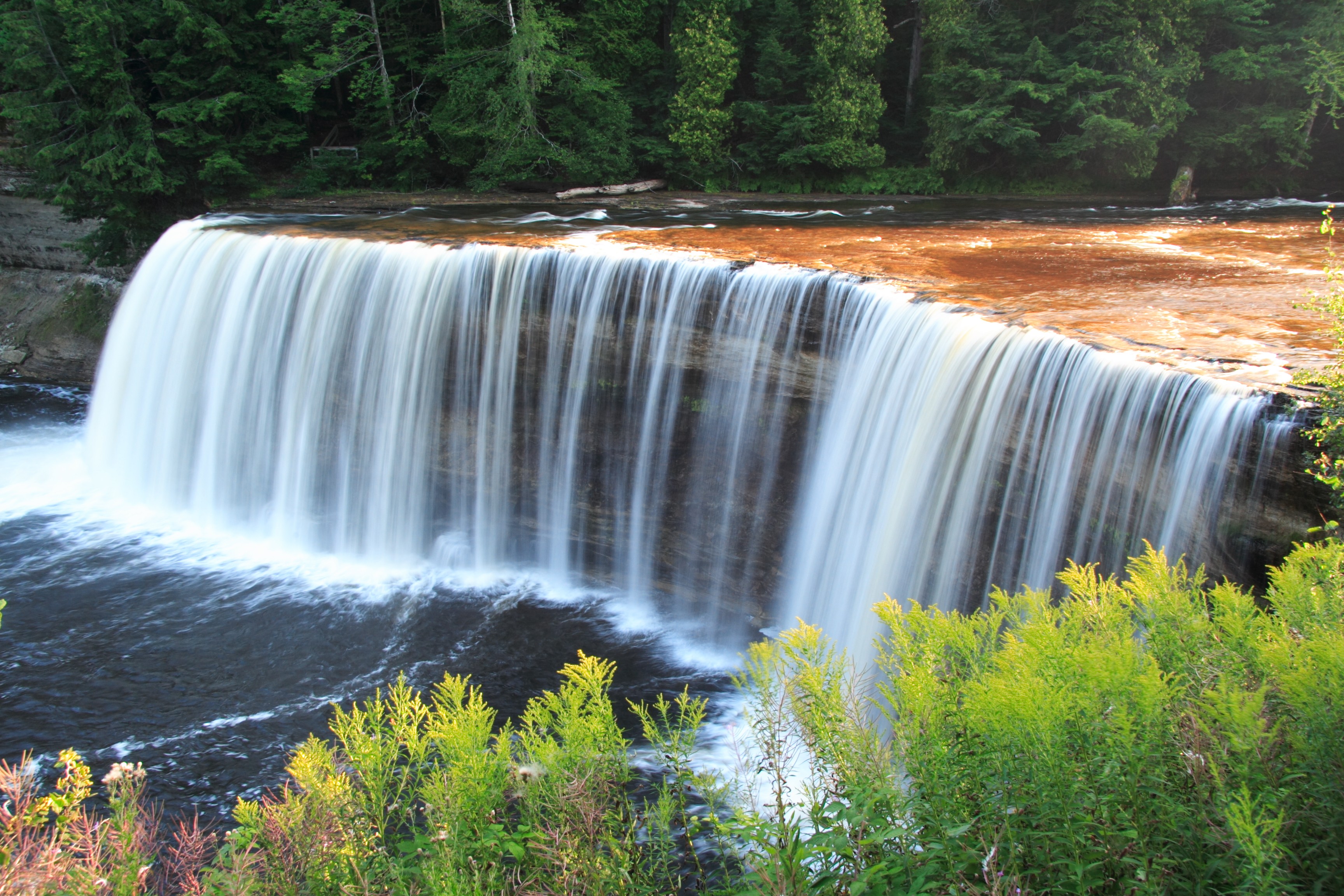

Decommissioning the Line 5 Pipeline
Decommissioning Line 5
The Great Lakes are not a pipeline corridor. They are our lifelines and the world's largest surface freshwater source. Line 5 is a Midwest issue because the pipeline runs through Wisconsin and Michigan, crosses the Straits of Mackinac, and connects to Canada. What happens to Line 5 affects the entire Great Lakes region.
Line 5 has a documented history of releases and spills. Conservation organizations currently document at least 33 Line 5 oil spills over the pipeline's history. In August 2026, Wisconsin experienced another major Line 5 release when an unoccupied subcontractor truck rolled into an excavation near Saxon and struck an existing section of the pipeline. Approximately 31,000 barrels of natural gas liquids, primarily propane and butane, were released. A nearby home was evacuated and Line 5 was temporarily shut down.
Some may argue that because propane and butane can evaporate, there was no environmental damage. I would say that is categorically false. Evaporation does not mean a release has no environmental consequences. These substances can create serious risks to people, wildlife and the environment during a release. We got lucky this time. This was not a release of tar sands crude oil into the surrounding environment, but the next Line 5 incident could be different. We should not wait for the next spill to find out. What happened in Wisconsin is reason enough to act now.
Decommission Means Full Stop
I do not support pretending that a new route automatically solves the problem. Any alternative must protect our water, respect Tribal sovereignty and treaty rights, and maintain reliable energy supplies. The existing Line 5 pipelines beneath the Straits of Mackinac are more than 70 years old and sit on the lakebed, while the proposed Great Lakes Tunnel would replace that crossing with a new pipeline inside a tunnel beneath the Straits.
A tunnel does not end Line 5. It allows Line 5 to keep operating, which is why I oppose the tunnel project. Decommissioning should mean a full stop on this dangerous pipeline. Building a tunnel still leaves risk to the Great Lakes ecosystem, and I will not support it.
Safely removing Line 5 will take skilled workers, engineers, environmental professionals, construction crews and other tradespeople. That work should be done carefully and safely, with the goal of getting the existing pipelines out of the Great Lakes rather than replacing them with another generation of petroleum infrastructure.
The proposed tunnel would require major excavation and construction on both sides of the Straits. The federal environmental review identifies potential impacts to groundwater, surface water, wetlands, habitat and geology, including the potential for drilling mud and excavated material to enter surrounding groundwater or surface water during construction. The project would excavate approximately 532,000 bank cubic yards of material and includes construction activities that would directly disturb wetlands.
Decommission Line 5. Remove it from the Great Lakes.
Protect Wisconsin's Water
Wisconsin must not become the regulatory loophole that allows Enbridge to perpetuate this risk. Under state law, the Wisconsin DNR has authority to modify, suspend, or revoke permits when permitted activities are not being conducted in compliance with applicable requirements or when environmental protections are at risk. The proposed Wisconsin relocation crosses approximately 185 waterways, and Wisconsin has an obligation to protect its rivers, wetlands, groundwater and Great Lakes resources.
I am calling on the Wisconsin DNR and Natural Resources Board to take two concrete actions:
- Escalate the Notice of Noncompliance to an immediate Stop Work Order and enforce full accountability for unauthorized wetland and waterway work.
- Initiate formal permit revocation proceedings for the proposed Line 5 Wisconsin reroute based on substantial noncompliance, unpermitted construction, and the risks created by approximately 185 waterway crossings.
Wisconsin has environmental laws and permit conditions for a reason. They need to be enforced.
Protect Michigan's Water
Michigan should not have to accept the continued operation of petroleum pipelines through the heart of the Great Lakes. The Straits of Mackinac connect Lake Michigan and Lake Huron, meaning a release there would threaten a much larger freshwater system than a single shoreline or community. Michigan's water supports communities, fisheries, tourism, agriculture, recreation and industry throughout the state, and these waters are also connected to the treaty rights, cultural resources and lifeways of Tribal Nations.
Michigan has already taken legal and regulatory steps concerning Line 5. In September 2026, state officials said the Michigan Supreme Court's July decision requires further consideration of the proposed tunnel's environmental consequences and alternatives. The state has also called on Enbridge to pursue an alternative capable of shutting down the existing pipelines without waiting for a tunnel that could take years. I support getting the existing Line 5 pipelines out of the Great Lakes and protecting Michigan's waters while that work moves forward.
Michigan's freshwater should not be treated as an acceptable place for unnecessary pipeline risk.
Michigan Should Appeal the Federal Tunnel Permit
Michigan should also challenge the federal permit for the proposed Great Lakes Tunnel. The U.S. Army Corps of Engineers issued Enbridge an individual permit on August 12, 2026, authorizing regulated activities associated with construction of the proposed tunnel beneath the Straits of Mackinac. The Corps' administrative appeal process provides a 60-day window for an affected party to appeal an appealable individual permit decision.
Michigan should file its appeal before October 11, 2026. Michigan should challenge the Corps' decision based on the environmental consequences of the project, the alternatives that should have been considered, impacts to the Great Lakes and public-trust resources, Tribal concerns, and the implications of the Michigan Supreme Court's July 2026 decision.
The federal permit should not be treated as the end of the process. Michigan should challenge it through every available administrative and legal avenue. Where the law provides grounds to do so, Michigan should seek reconsideration, suspension, withdrawal, or invalidation of the federal permit.
Michigan should not sit on the sidelines while a new petroleum pipeline project moves forward beneath the Great Lakes.
Why I Oppose the Tunnel
The proposed tunnel is not a small repair project. It would put a new petroleum pipeline inside a concrete-lined tunnel approximately four miles long and 21 feet in diameter, running roughly 60 to 370 feet beneath the lakebed of the Straits of Mackinac. The tunnel would also contain ventilation systems, leak detection, dewatering equipment, and other equipment needed to inspect and maintain the pipeline.
That means building a four-mile underground petroleum facility beneath the Great Lakes. The tunnel also raises serious engineering and safety concerns. Michigan's technical review classified the tunnel as “Potentially Gassy,” meaning gases encountered underground could create fire, explosion and worker-safety risks. Ventilation is not a minor issue in a tunnel of this length. The tunnel has to be continuously monitored and ventilated, and the project has to account for the possibility of gas accumulating underground.
The tunnel would also require major excavation and construction on both sides of the Straits. The project would disturb wetlands and require groundwater management, water treatment, stormwater management and other construction activities. The environmental review identifies potential impacts to groundwater and surface water, including the potential for drilling mud and excavated material to enter surrounding water during construction.
Even after construction is finished, the result would still be a petroleum pipeline operating beneath the Great Lakes. A tunnel does not decommission Line 5. It builds a new home for it. I will not support the Great Lakes Tunnel project. I support safely decommissioning Line 5 and physically removing the existing pipelines from the Great Lakes.
Protect the Straits of Mackinac
The Straits of Mackinac connect Lake Michigan and Lake Huron and are among the most important waters in the Great Lakes. The existing Line 5 pipelines sit on the lakebed beneath the Straits of Mackinac, which are also Anishinaabe treaty waters.
Protecting the Straits means protecting the water, respecting treaty rights, and removing petroleum infrastructure from the Great Lakes. Get Line 5 out of the Great Lakes.
A Midwest Responsibility
I was born in Wisconsin, I live in Michigan, and I am running for the United States Senate because the Great Lakes do not stop at state lines. This is not Michigan versus Wisconsin, and it is not Wisconsin versus Canada. It is a shared freshwater system serving communities across the Midwest.
But a Midwest candidate should also be asking a bigger question: How does this project affect the entire nation? That means asking honest questions about energy security on both sides. How do we protect families who rely on propane and other petroleum products? How do we make sure alternative supplies are available, affordable and reliable before Line 5 is decommissioned?
Those questions have already been studied. Michigan created the Upper Peninsula Energy Task Force to identify alternatives to the propane supply that moves through Line 5, and the state subsequently developed its MI Propane Security Plan: “Ensuring Resilience Without Line 5.” The state's plan identifies measures including alternative propane sourcing, transportation and storage, market monitoring, consumer protection, energy efficiency, weatherization, electrification and renewable energy.
So asking only, “What happens to heating supplies if we decommission Line 5?” while ignoring the work already done to develop alternatives is shortsighted. But pretending there is no energy-supply question would be just as irresponsible.
Instead, we should examine whether Enbridge can maintain the necessary petroleum connections through a land-based route that avoids the Great Lakes and avoids crossing Tribal lands or interfering with treaty-protected rights. Federal environmental review has already considered alternatives that would connect the Superior, Wisconsin, and Sarnia, Ontario, systems without crossing the open waters of the Great Lakes, including a potential new pipeline through Canada. Before choosing a replacement system, we should establish whether those alternatives are technically feasible, environmentally responsible, legally permissible, and capable of maintaining reliable energy supplies.
The answer is not to make the Great Lakes carry the risk forever. The answer is to build the alternatives before we need them. Responsible decommissioning means planning the transition, protecting families from supply disruptions, maintaining reliable energy supplies, and reducing our dependence on infrastructure that puts the Great Lakes at risk.
And the same principle applies beyond propane. If petroleum supplies are disrupted, we need resilient alternatives and contingency plans. If Line 5 fails catastrophically, we could face both an energy disruption and an environmental disaster at the same time. We should prepare for the first without accepting the risk of the second.
The consequences would not stop at the shoreline. A major spill could harm fish and wildlife, contaminate wetlands and habitat, and affect communities that depend on the Great Lakes for drinking water, recreation, agriculture, tourism and industry. It would also threaten the treaty rights of Tribal Nations whose people have legally protected rights to fish and gather in these waters. The 1836 Treaty protects tribal fishing rights in the Straits of Mackinac and adjoining waters of Lakes Michigan and Huron. A major Line 5 rupture could damage the fish populations and habitat that those rights depend upon.
These waters are not just resources on a map. They are living ecosystems. Fish, birds, plants, wildlife and entire food webs depend on the Great Lakes to survive. When petroleum enters that system, the damage does not simply disappear when the visible oil is gone. Once petroleum contaminates a major freshwater ecosystem, cleanup is not simple. Contamination can reach shorelines, wetlands, sediments and wildlife, making the environmental damage difficult to fully remediate.
We got lucky with the August release in Wisconsin. The next Line 5 incident could be different. It could involve crude oil and it could happen in the Great Lakes. We should not wait for that disaster before we act.
That is why this cannot be treated as a narrow state or regional infrastructure decision. The Great Lakes provide drinking water to more than 40 million people and support communities, fisheries, agriculture, tourism and industry throughout the region.
We should not ask our children to inherit the same pipeline and the same risks simply because previous generations accepted them. The Midwest deserves better than another generation of Line 5.
I will work toward the decommissioning and removal of Line 5 from the Great Lakes and use every federal authority available to protect our water until that goal is achieved.
Protect Wisconsin's water. Protect Michigan's water. Protect the Great Lakes. Protect the Straits of Mackinac. Protect treaty rights. Decommission Line 5.

Policies on this page are living documents. Lydia updates them as research, legislation, and community input evolve. If something here should be sharper, more accurate, or missing entirely, tell her campaign.